


How Travel Insurance can help when extreme weather disrupts your trip
Published on: 08 Sep 2026
Updated on: 08 Sep 2026
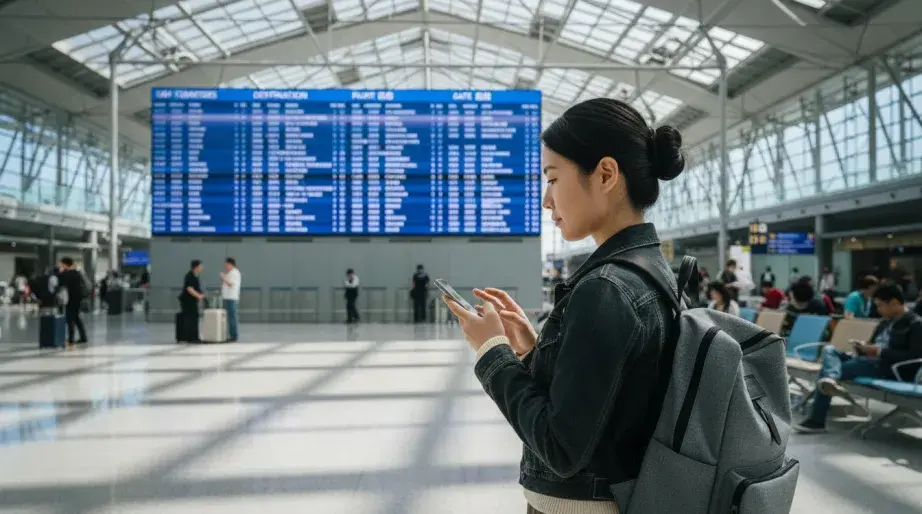
As extreme weather becomes more frequent, a single storm can bring rail services to a halt, cause severe traffic disruption, and prevent travellers from reaching the airport or continuing their journey. Last month, record-breaking rainfall in Chiba, Japan temporarily left Narita Airport isolated, stranding thousands of passengers. In situations like these, what protection can Travel Insurance provide, and how can travellers prepare to minimise the impact of unexpected disruption?
Flights may still operate during typhoons and heavy rain
Many people assume that all flights are cancelled whenever a Typhoon Signal No. 8 is issued or heavy rain occurs. In reality, airlines make operational decisions based on factors such as wind conditions, visibility and runway safety. As a result, some flights may be cancelled while others continue to operate as scheduled. Before travelling to the airport, it is always advisable to check the latest flight status.
Take the example of Mr Chan, who was due to return to Hong Kong from Tokyo on a Sunday. He received notice the day before departure that his flight had been cancelled because of an approaching typhoon. With the next available seat not departing for another three days and work commitments requiring his return, he purchased a ticket with another airline for around HK$7,000 and travelled back to Hong Kong via Macau. After obtaining proof of flight cancellation from the original airline and submitting the relevant receipts, he successfully claimed the additional costs under his Travel Insurance's Trip Rearrangement benefit.
When getting to the airport becomes the challenge
In many cases, the biggest travel disruption caused by extreme weather is not a cancelled flight, but the suspension of local transport services.
During the recent heavy rainfall in Chiba, for example, several railway lines were suspended, forcing many travellers to take taxis to Narita Airport. Some paid close to HK$2,000 in taxi fares in an attempt to catch their flights.
If your Travel Insurance includes Additional Transport Expenses cover, you may be able to claim for reasonable and necessary transportation costs incurred as a result of such disruptions. However, most policies are subject to specific benefit limits, typically ranging from HK$1,000 to HK$1,500 per insured person. Any expenses exceeding the applicable policy limit will need to be borne by the traveller.
Similarly, if your flight departs on time but transport disruption prevents you from arriving at the airport in time to board, any additional costs incurred to change your ticket or purchase a new one may also be covered under your policy's Trip Rearrangement benefit. In these circumstances, travellers should first contact the airline to explore alternative arrangements and retain all supporting documents and receipts for claims purposes.
When you reach your destination but cannot reach your hotel
Even after arriving at your destination, extreme weather can continue to affect your plans. Heavy rain, flooding or typhoons may leave roads impassable, making it impossible to reach your hotel and, in some cases, forcing travellers to remain at the airport.
Travel Insurance may provide protection in two ways. Firstly, you may be able to claim for prepaid accommodation costs that cannot be refunded. Secondly, if alternative accommodation is required, reasonable and necessary additional expenses may also be covered. Some policies also provide cover for meals and essential personal items purchased during an unexpected delay.
In addition, losses arising from pre-booked and non-refundable travel packages, attraction tickets or restaurant reservations that cannot be used because of adverse weather conditions may also be covered, depending on the policy terms and conditions.
Keep supporting documents and understand your cover
A successful claim often depends on having the right supporting documentation. To help ensure a smoother claims process, travellers should keep screenshots or photographs of service suspension notices issued by government authorities, airlines or railway operators, together with relevant news reports confirming the disruption.
It is equally important to retain transport receipts, proof of non-refundable accommodation charges, and records of any flight changes or cancellations.
Where significant additional expenses are expected, such as emergency accommodation or alternative transport, travellers should review their policy wording in advance to understand the coverage available and any applicable benefit limits. Understanding your cover before you travel can help avoid unexpected out-of-pocket expenses and make the claims process more straightforward should disruption occur.
Learn more
This Chinese version of this article was published in the Hong Kong Economics Journal
If you have any queries regarding Travel Insurance, please feel free to contact us  or find out more about our insurance plans:
Read more:
How to make solid plans for your child’s overseas studies?
Self-drive rental protection: Peace of mind for every journey
Learn more about EASY Claims and file your claims online anytime, anywhere.