


How to handle a suspected crash-for-cash incident: Explaining comprehensive vs third party motor insurance explained
Published on: 05 Nov 2026
Updated on: 05 Nov 2026
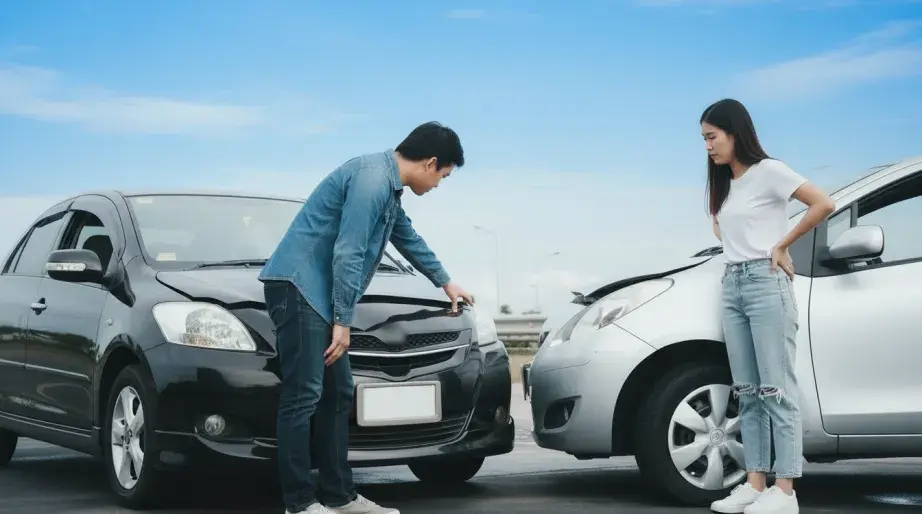
If you suspect a “crash-for-cash” scam or a staged accident, your priority should be to ensure your personal safety and that of other road user, preserve all available evidence, and notify the relevant authorities and your insurer as soon as possible. Important evidence includes dashcam footage, photographs of the accident scene, vehicle damage and the contact details of all parties involved. You should avoid admitting liability, making on-the-spot payments or signing private settlement agreements.
Third party motor insurance primarily covers your legal liability to third parties, while comprehensive car insurance extends protection to your own vehicle and may include additional benefits such as roadside assistance.
The term “crash-for-cash” is commonly used to describe suspicious accidents, but a minor collision or a high claim amount alone does not prove fraud. The safest approach after any accident is to accurately document the incident, preserve evidence, and allow the police and insurer to investigate.
How can you identify a suspicious collision? Four warning signs
Suspicious accidents can occur at roundabouts, narrow roads, lane merges, junctions or blind spots. While the following situations may warrant extra caution, they do not automatically indicate fraud:
- The other vehicle suddenly accelerates when you are changing lanes or exiting a junction, and the point of impact appears inconsistent with the driver’s account.
- The other party refuses to exchange basic information but repeatedly pressures you to make an immediate payment, sign documents or visit a specific repair workshop.
- The damage appears minor or there may be no obvious contact, yet a disproportionately large claim is submitted afterwards.
- The other party changes their version of events, pressures you to admit fault, deletes dashcam footage or avoids reporting the accident.
If you feel threatened, lock your vehicle and stay inside. When it is safe to do so, drive to a suitable location or follow police instructions. Call 999 immediately if assistance is required. Never attempt to follow, block, expose or publish another individual’s personal information on social media.
Seven steps to take after a car accident
Step 1 - Stop immediately and prioritise safety
Regardless of the extent of the damage to their vehicles, drivers involved in a traffic accident should stop safely. Turn on your hazard lights, switch off the engine and remain alert to dangers such as oncoming traffic or fuel leaks.
If anyone is injured, if there is a fire risk or if the situation is unsafe, call 999 immediately. Do not stand in traffic lanes or between vehicles simply to take photographs.
Step 2 - Determine whether the vehicle can be moved
If the accident involves injuries, fatalities or significant damage to vehicles or property, do not move or interfere with the vehicles unless it is absolutely necessary to save someone’s life, prevent fire or address another emergency, and only do so with police approval.
For minor accidents that don’t result in injuries, each party may first record the original position of their vehicle before moving them to a safe location to avoid obstructing traffic. If the accident occurs inside a tunnel, follow the instructions of the relevant authorities.
Step 3 - Capture the scene before the details
From a safe position, photograph or record the following: the time and location of the incident, original positions of the vehicles, road markings and traffic signals, weather and road conditions, vehicle registration numbers, impact points and vehicle damage, debris, skid marks and any other relevant evidence. Retain all original photo and video files.
You should also back up dashcam footage promptly to prevent it from being overwritten. If CCTV cameras are nearby, note their locations. Obtain contact details of any witnesses, if available, as they could prove useful during the investigation.
Step 4 - Exchange required information
According to requirements set out by the Hong Kong Government’s Transport Department, where an accident causes injury, vehicle damage, property damage or damage to animals, drivers must provide their name and address, the vehicle owner’s name and address and the vehicle registration number.
For insurance claim purposes, it is also advisable to collect the contact number, driving licence information, insurance company details and policy information from the other driver. Only collect information relevant to the incident.
Step 5 - Do not admit liability, pay compensation or sign private settlements
You may provide a factual account of events, such as “my vehicle was travelling in this lane” or “the impact occurred on the left front side”.
However, do not make statements such as “the accident was entirely my fault”, agree to compensation or sign documents prepared by the other party.
Even if the other party claims the matter is minor, private payments may not prevent future claims for bodily injury or other damages. Admitting liability without your insurer’s consent may affect your ability to obtain policy benefits.
Step 6 - Report the incident to the police when necessary
If the accident involves injuries, fatalities or if the other party cannot provide the necessary information, the incident should be reported to the police as soon as reasonably practicable, and no later than 24 hours after the accident has occurred.
Even where only minor property damage is involved and all details have been exchanged, you should still consider reporting the incident if: you suspect the accident was staged, the claim appears suspicious, the other party is uncooperative or there was a significant dispute over liability. Be sure to obtain a police report reference number.
Step 7 - Notify Your insurer immediately
Even if you do not intend to make a claim, you should inform your insurer as soon as possible. MSIG requires claim forms to be submitted within 30 days of an incident. If supporting documents are not yet available, submit the claim form first and provide additional information later. Some policies may impose earlier notification requirements, so the 30-day period should not be treated as a waiting period.
When reporting an accident, prepare accident details, the police report reference number, witness statements, photos and videos, information of all parties involved parties and quotations for any repairs.
Do not carry out repairs or dismantle damaged parts of your vehicle before receiving your insurer’s approval. If you later receive a third-party claim letter, solicitor’s letter or court summons, keep all documents and forward them to your insurer immediately.
What does third-party motor insurance cover? Comparison with comprehensive car insurance
Hong Kong law requires every vehicle used on public roads to carry valid insurance covering liability for third-party bodily injury or death. Most third-party motor insurance policies also cover third-party property damage but do not cover damage to the insured vehicle.
Comprehensive car insurance extends coverage to your own vehicle, subject to policy terms and conditions.
| Coverage Item | Third-party motor insurance | Comprehensive car insurance |
|---|---|---|
| Third-party death or bodily injury | Covered, subject to legal liability and policy limits | Covered, subject to legal liability and policy limits |
| Third-party property damage | Covered. MSIG provides up to HK$2 million | Covered. MSIG provides up to HK$2 million |
| Damage to your own vehicle | Not covered | Covered, subject to insured value, market value, excess and policy terms |
| Theft, fire and flood damage | Not covered | Covered for insured events, subject to policy terms |
| Windscreen, new-for-old replacement and driver protection | Generally not covered | Included under applicable MSIG benefits |
| Roadside assistance and towing | Generally not covered | Includes 24-hour emergency assistance and towing services |
In simple terms, third-party motor insurance protects you against legal liability to third parties. If an investigation confirms that you are not legally liable for the accident, the insurer will generally not be required to compensate the claimant.
Comprehensive car insurance offers an additional layer of protection for your own vehicle. Even if a third party causes the accident, you may claim under your own policy first, after which your insurer may seek recovery from the responsible party, where applicable.
Key benefits of MSIG Private Car Insurance
MSIG Private Car Insurance offers:
- Legal liability protection for third-party death, bodily injury and property damage arising from motor accidents, including third-party property coverage up to HK$2 million.
- Windscreen repair coverage with excess waiver for claims up to HK$5,000, without affecting the No Claim Discount, subject to policy terms.
- New-for-old vehicle replacement for cars less than one year old that are totally written off or stolen, subject to policy conditions.
- Medical expenses coverage of up to HK$5,000 for injuries sustained in a driving accident.
- Personal accident coverage of up to HK$100,000 for accidental death, loss of limbs or loss of sight.
- 24-hour roadside emergency repair service, free towing and replacement vehicle assistance.
It is important to note that “comprehensive” does not mean every loss will be repaid in full. Compensation for vehicle damage is typically limited to the lower of the insured value and the vehicle’s market value at the time of loss, and may be subject to excesses, depreciation or betterment deductions.
Car insurance claim checklist
To avoid losing important evidence, create an accident file and keep the following documents together:
- The completed accident report or claim form, insurance policy details and claim reference number.
- Identity documents of the vehicle owner and driver, a valid driving licence and vehicle registration documents.
- Original photographs and videos, dashcam footage, witness details and CCTV references.
- The police report number and related documents, repair quotations and inspection reports, towing and emergency expense receipts, and medical reports and receipts, if applicable.
- Third-party claim letters, solicitor’s letters, court documents and any other correspondence.
In summary, when dealing with a suspicious collision, the priority is not to determine on the spot whether the other party is involved in a “crash-for-cash” scam. Instead, you should first ensure the safety of all parties, preserve original evidence, exchange information in accordance with legal requirements, and report the incident to the police and your insurer as soon as possible.
When choosing motor insurance, it is also important to consider whether you can afford the financial impact of a total loss or substantial repair costs. If your primary concern is meeting legal requirements and obtaining third-party liability protection, third-party motor insurance may be suitable. However, if you would like coverage for your own vehicle, driver protection and roadside assistance services, comprehensive car insurance generally offers more extensive protection.
Frequently asked questions
What does third-party motor insurance cover?
Third-party motor insurance primarily covers your legal liability for third-party death, bodily injury and property damage arising from a motor accident. It does not cover damage to your own vehicle.
What is the main difference between comprehensive car insurance and third-party motor insurance?
The key difference is whether your own vehicle is covered. Comprehensive car insurance includes third-party liability protection and covers damage to your own vehicle arising from insured events, while third-party motor insurance generally does not.
Do I need to report a minor accident to the police?
Not necessarily. Where only minor property damage is involved, no one is injured and both parties have exchanged the required information, a police report might not be required. However, you should still notify your insurer promptly. If injuries occur, information cannot be exchanged or the circumstances appear suspicious, you should report the incident to the police immediately.
Can I settle privately if I suspect a “crash-for-cash” scam?
No. Do not make on-the-spot payments, admit liability or sign any settlement agreements. Instead preserve evidence, exchange the necessary information, report the matter to the police and notify your insurer so that the incident can be properly investigated.
What documents are required for a car insurance claim?
Typically, you will need an accident report or claim form, insurance details, your driving licence, vehicle registration documents, police records, photographs, dashcam footage, repair quotations, receipts and third-party information. Requirements may vary by insurer.
What should I do if I receive a solicitor’s letter or third-party claim?
Keep the envelope and all related documents and forward them to your insurer immediately. Do not admit liability, negotiate directly or ignore any deadlines stated in the correspondence.
If I pay privately after an accident, can I still be sued later?
Possibly. A private payment does not necessarily prevent future claims, particularly for bodily injury. Failure to notify your insurer promptly may affect coverage and could leave you personally responsible for any subsequent liabilities. Even if you do not intend to claim, you should still notify your insurer in accordance with the policy terms.