

What does travel insurance cover? Coverage, exclusions and claims guide
Updated on: 10 Sep 2026
Published: 09 Sep 2026


What does travel insurance cover? A comprehensive guide to insure timing, coverage and claims documents
Travel insurance provides protection against eligible losses arising from sudden and unforeseen events during a journey. Depending on the policy, travel insurance coverage may include overseas medical expenses, personal accidents, emergency assistance, trip cancellation or curtailment, travel delays, luggage and personal belongings, and personal liability.
However, travel insurance does not cover every situation. Each benefit is subject to specific covered causes, eligibility requirements, compensation limits, deductibles, sub-limits, documentation requirements and policy exclusions.
If you are wondering what does travel insurance cover, the easiest way to understand your protection is to look at your trip in three stages:
| Stage | Most important action |
| Before departure | Take out travel insurance as early as possible, compare travel insurance coverage, limits and exclusions, and keep payment records for flights and accommodation. |
| During the trip | If an accident occurs, prioritise your personal safety, minimise losses, contact emergency assistance or relevant authorities, and obtain official reports and receipts. |
| Returning home | Submit your travel insurance claim within the required claim period and provide all supporting documents. |
Before departure: understanding the best time to take out travel insurance and how to choose a travel insurance plan
When should you take out travel insurance?
The best time to take out travel insurance is shortly after making your first payment for flights, hotels, tours or other travel arrangements. Certain benefits, such as trip cancellation coverage, may begin once the policy has been issued. These benefits typically protect against specified events such as accidental injury or illness of the Insured Person, a travel companion or immediate family member, jury service obligations, severe weather causing public transport suspension, or other covered events listed in the policy.
However, if an incident has already occurred, has been officially announced or is reasonably foreseeable before the policy is issued, it is generally regarded as a known risk and may not be covered. For example, losses arising directly or indirectly from a typhoon, earthquake, strike or travel alert announced before the policy is issued are typically excluded.
Most travel insurance policies must also be taken out before departing from Hong Kong. Once a trip begins, travellers generally cannot retroactively purchase coverage for that journey.
Standard trip cancellation benefits usually apply only to specific causes defined in the policy, such as accidental injury or illness of the Insured Person or an immediate family member, severe weather that causes the suspension of public transport and other scenarios. Cancelling simply because of a change of mind is generally not covered.
Some plans provide a “Cancellation for any reason” benefit. For example, under MSIG iTravel Go (Single Trip) Insurance Plan A, this benefit offers coverage up to a specified maximum benefit amount and is subject to a 50% deductible. The policy must also be taken out within seven days of the first travel booking or payment.
What does travel insurance cover?
4 typical travel insurance coverages include:
- Medical and personal protection: includes overseas outpatient, hospitalisation, surgical expenses and prescription medication, as well as personal accident, emergency medical evacuation and repatriation to Hong Kong.
- Trip rearrangement: includes trip cancellation, curtailment, travel delay or rearrangement, flight diversion, flight overbooking and missed travel connections. Claim eligibility is subject to the cause of the disruption, waiting periods and policy terms. For example, the MSIG iTravel Go (Single Trip) Insurance Plan A includes a travel delay benefit of HK$300 for every 5 hours of delay (up to HK$3,000), a trip rearrangement benefit of up to HK$13,000 and a cancellation for any reason benefit of up to HK$25,000 (subject to a 50% deductible. The policy must be purchased before or within 7 days from the date you made your initial payment or deposit for your trip.)
Baggage and personal belongings: includes delayed checked baggage, lost, stolen or damaged baggage, personal money, travel documents, mobile phones, laptops and tablets. Individual item limits usually apply.
Under MSIG iTravel Go (Single Trip) Insurance Plan A, the benefits include baggage and personal money up to HK$20,000, mobile phone up to HK$3,000 per device, laptop or tablet up to HK$6,000 per item, and delayed baggage after 6 hours up to HK$1,000.
- Other travel risks: includes personal liability, rental vehicle excess, home contents during travel, adventure activities, cruises and pet-related travel protection. For example, the MSIG iTravel Go (Single Trip) Insurance Plan A features a personal liability benefit of up to HK$2,500,000, rental vehicle excess of up to HK$10,000 and home contents of up to HK$30,000.
Depending on the benefit, travel insurance may reimburse actual eligible expenses incurred or provide a fixed benefit based on the length of the delay. However, the same loss is generally not eligible for overlapping compensation or mutually exclusive benefits. When considering how to choose a travel insurance plan, travellers should look beyond premium costs and consider coverage limits, deductibles, age-related reductions, maximum trip duration, covered destinations, 24-hour emergency assistance services and claims arrangements.
What are some common travel insurance exclusions?
Common travel insurance exclusions include pre-existing medical conditions, known events, announced natural disasters or announced strikes before policy purchase, intentional self-harm, illegal acts, incidents involving alcohol or drugs, and participation in excluded occupations or high-risk activities. Normal wear and tear, unattended property and property confiscated by government authorities are also commonly excluded.
Losses arising from war, civil war, rebellion or government intervention are typically excluded under most travel insurance policies. Coverage for terrorism-related incidents depends on the policy wording and optional benefits. Flight schedule changes resulting from airline operational decisions, such as crew allocation, route adjustments or fuel management, might not qualify under standard travel insurance benefits.
Similarly, changing your mind, work schedule changes or missing a flight due to arriving late are generally not covered unless the policy specifically includes cancellation for any reason protection.
During the trip: handle the incident first, then gather travel insurance claims evidence
Seeking medical treatment overseas or when an accident occurs
If you become ill or injured while travelling, seek treatment from a licensed local medical provider as soon as possible. Retain medical receipts, itemised bills, medical certificates, diagnostic reports, prescriptions, hospital admission and discharge records for claims. If emergency medical evacuation, hospital admission deposits or repatriation assistance is required, contact the policy’s 24-hour emergency assistance hotline whenever possible. Making independent arrangements for expensive emergency transportation without insurer approval may affect your travel insurance claim.
If follow-up consultations or medical treatment is required after returning to Hong Kong, travellers should verify whether their travel insurance policy covers post-trip follow-up treatment, and review any applicable coverage period, benefit limits and requirements relating to eligible healthcare providers.
Travellers may also consider using MSIG’s overseas medical teleconsultation service in Japan, Singapore, Thailand, Vietnam and the Philippines. Simply use the DrGo App to schedule a free medical teleconsultation with designated locally registered doctors at your destination. You may also book a Hong Kong doctor for a second opinion, subject to eligibility requirements and relevant terms and conditions.
Flight delays, cancellations or diversions
When flights are delayed, cancelled or diverted, travellers should first contact the airline regarding alternative flight arrangements, refunds, hotel accommodation, meals or transportation assistance. Travel insurance generally covers only eligible losses that have not already been compensated by airlines or other parties.
Travellers should also request written confirmation from the airline detailing:
• Passenger name and flight number
• Reason for delay, cancellation or diversion
• Scheduled and actual departure time
• Departure and destination airports
A boarding pass alone is generally insufficient to support a travel insurance claim. Receipts for reasonable additional expenses should also be retained. Eligible policyholders who have pre-registered flights may also enjoy the MSIG Easy Lounge service when registered flights are delayed by more than 60 minutes. The policyholder and up to 5 travel companions can access over 1,700 airport lounges for free. Registration must be completed 24 hours before the scheduled departure of your flight to enjoy this service.
Lost, delayed or damaged luggage or personal belongings
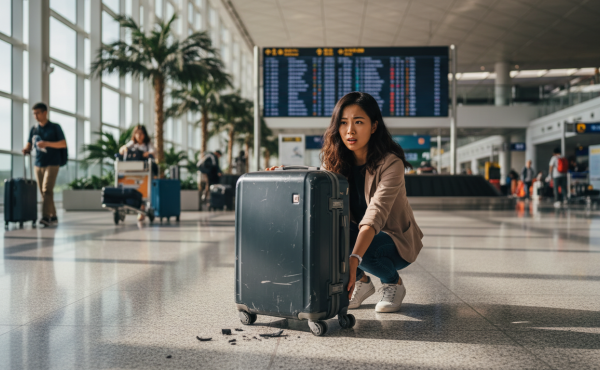
If checked baggage is delayed, lost or damaged, report the incident immediately to the airline and obtain a baggage incident report. For losses occurring at hotels or public venues, obtain written reports from the relevant organisations. In the event of theft, report the incident to the police immediately.
Under current MSIG policy requirements, loss of passports or personal belongings should generally be reported to local police and/or carriers within 24 hours of discovery. For travel insurance claims, retain the baggage tags, photographs of damage, repair quotations and purchase receipts for emergency replacement items. Do not dispose of damaged property before the insurer has assessed the claim.
For rental vehicle or personal liability incidents, do not admit liability or settle privately. Notify the insurer and retain all relevant reports, on-the-spot photographs, your international driving licence, the excess payment receipt and any third-party correspondence.
After returning home: understanding travel insurance claim deadlines and required documents
Travel insurance claims periods under different policies may be different. Under the current MSIG iTravel Go (Single Trip) Insurance policy, any claim or potential claim must be reported in writing within 30 days of the incident. Certain incidents may also require immediate reporting to police authorities, and within a specific period for reporting to transport operators. Travellers should notify the insurer as soon as possible after an incident occurs rather than waiting for all the documents to be collected.
Before submitting a travel insurance claim, prepare the following basic information:
• Policy number
• Travel itinerary and flight tickets departure from and arriving in Hong Kong
• Claimant information and relationship proof (if applicable)
• Contact information
• Bank account details
Prepare the respective supporting documents by claim type:
| Claim item | Common supporting documents |
| Overseas medical | Medical receipts, itemised bills, medical certificates or reports, prescriptions and travel records |
| Flight or travel delay | Boarding passes, airline delay or cancellation confirmation, and receipts for reasonable extra expenses |
| Trip cancellation or curtailment | Travel and deposit receipts, proof of non-refundable expenses, cancellation confirmation, and related medical or incident documentation |
| Baggage and personal belongings | Reports from the police, airline or hotel within 24 hours of discovery, baggage tags, photographs of the damage, purchase receipts, repair or replacement receipts |
| Rental vehicle or personal liability | Vehicle rental agreement, driving licence, accident or police reports, excess payment receipts and third-party correspondence |
MSIG customers can submit travel insurance claims through the EASY Claims online platform by completing claim and contact information, choosing the claim type, uploading supporting documents and providing bank account details. Always keep your claim reference number and retain all original documents until the claim process is complete.
Why are travel insurance claims rejected?
Common reasons for rejected travel insurance claims include events not covered by the policy, foreseeable or known risks before policy purchase, delay duration not meeting the required threshold and if the loss falls below the deductible amount.
Other reasons may include property being left unattended, missing official reports from the airline, police or medical authority, claims being reported outside the claim period, refunds not being first pursued from airlines or service providers, duplicate claims being submitted for the same loss, and the arrangement of emergency services without the insurer’s approval. Incomplete or inconsistent documentation may also delay a claim assessment.
Frequently asked questions about travel insurance
What does travel insurance cover?
Typical travel insurance coverage includes overseas medical expenses, personal accident protection, emergency assistance, trip cancellation and curtailment, travel delays, baggage and personal belongings, and personal liability. Actual travel insurance coverage and benefits depend on the selected plan and policy wording.
Can I claim for trip cancellation for any reason?
Standard trip cancellation benefits generally only apply to specified events. Only plans that specifically include cancellation for any reason coverage may provide compensation for personal reasons, subject to deductibles, purchase deadlines and maximum benefit limits.
What is the typical travel insurance claim period?
Many policies require notification or claim submission within a period approximately 30 days after an incident. However, claim periods vary by policy and benefit type. Always refer to your policy’s terms and conditions.
Is a boarding pass enough for a flight delay claim?
Generally, no. Travellers should also obtain official confirmation from the airline showing the reason for the delay, as well as the scheduled and actual departure times, and retain reasonable extra expense receipts.
Can I claim travel insurance after receiving an airline refund?
You may still claim eligible unrecovered losses if they are covered under the policy. However, the same loss cannot be compensated twice. Any refunds or compensation already received from airlines, hotels or other parties must be disclosed.
Travel insurance is more than providing financial protection after an unexpected event. It helps travellers understand their travel insurance coverage and exclusions before departure, respond appropriately to incidents during their journey, and prepare the necessary documents for travel insurance claims after returning home.
Before purchasing travel insurance, travellers should carefully review the benefit schedule, policy definitions, exclusions and claims terms. This article is provided for general information only. Actual coverage, benefits and claim results are subject to the applicable policy terms and conditions and the insurer’s final assessment.